📅 June 2026 | ✍️ Mitti Gold Organic | 🗂️ Govt Schemes
Subsidy Per Hectare and Financial Breakdown
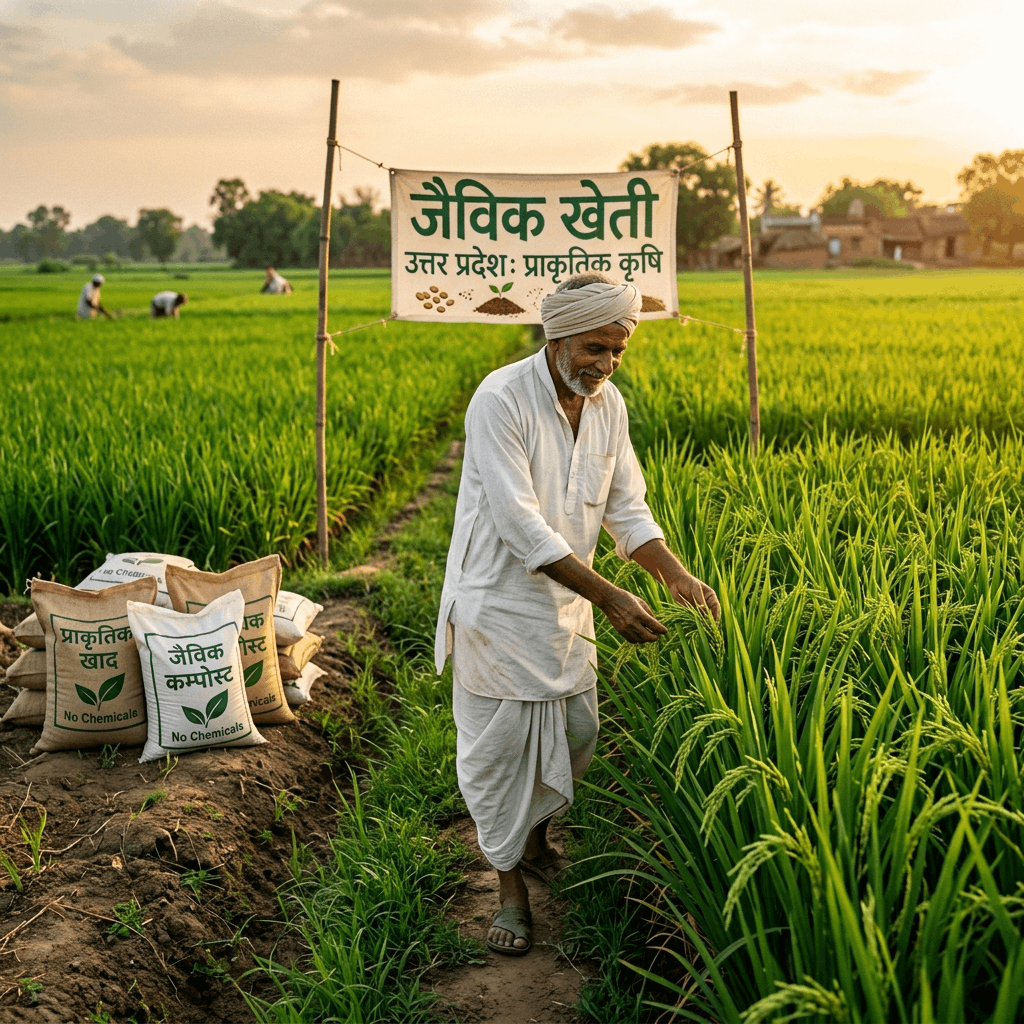
Under the Paramparagat Krishi Vikas Yojana (PKVY) and the Namami Gange project, the UP Government offers significant financial support for organic transition. Farmers can receive up to ₹50,000 per hectare over a three-year period. To achieve a high level of technical breakdown, we must analyze the fund allocation: ₹31,000 (62%) is provided directly to the farmer for organic inputs like bio-fertilizers, bio-pesticides, and seeds. The remaining ₹19,000 is used for cluster formation, capacity building, and the crucial "PGS-India" certification process. This financial bridge is essential for farmers who may see a slight dip in yield during the first two years of transition as the soil biology recovers from chemical dependency. Furthermore, modern agricultural policies emphasize precision application metrics. Under these guidelines, farmers are encouraged to utilize soil health data to optimize resource utilization, ensuring that soil compaction is minimized and fertilizer runoff is completely prevented. This systematic approach enhances overall soil organic carbon (SOC) levels while protecting local watersheds from chemical leachate in India. From an administrative and modern agricultural policy perspective, the implementation of state-sponsored farmer subsidy schemes plays a pivotal role in accelerating the adoption of sustainable farming technologies. These guidelines are carefully structured to encourage farmers to use precise digital mapping to optimize input applications. By integrating subsidy benefits with verified land records, the policy ensures that high-tech machinery, micro-irrigation systems, and certified organic fertilizers are distributed to genuine cultivators, thereby minimizing resource waste and reducing input costs. In India, these systematic policy interventions actively promote conservation agriculture, helping to rebuild the soil organic carbon pool, reduce carbon emissions, and protect local agricultural ecosystems from chemical degradation while enhancing the long-term viability of small and marginal farm holdings.
The Cluster-Based Approach and Implementation
Organic subsidies in UP are primarily distributed through a "Cluster-Based" model. A group of 50 or more farmers, covering a minimum of 20 hectares, must form a cluster to be eligible for the full PKVY benefits. This encourages community-led certification and makes it viable for the government to provide shared resources like custom hiring centers for organic machinery. Understanding the role of the "Lead Farmer" and the "Regional Council" is vital, as they manage the documentation and internal audits required for Participatory Guarantee System (PGS) certification. The focus is on the "Ganga Belt" (districts along the river) where organic farming is being promoted to reduce chemical runoff into the river. To maximize the efficiency of these subsidized technologies in India, proper implementation is critical. For instance, drip irrigation systems must be calibrated to match the local soil infiltration rate, while modern seeders should be operated at precise ground speeds to maintain crop spacing. Combining these advanced systems with biological inputs ensures a synergistic effect that boosts crop yield. To maximize the operational efficiency of subsidized agricultural machinery and infrastructure in India, proper setup and technical calibration are absolutely essential. For instance, subsidized drip and sprinkler irrigation networks must be dynamically aligned with the local soil's water infiltration rate and the crop's specific growth stage to prevent water logging or root stress. When using modern subsidized seed drills or automated planters, maintaining a steady, scientifically recommended tractor speed ensures uniform seeding depth and optimal row-to-row spacing, which directly translates to uniform crop germination. Furthermore, integrating these physical mechanized tools with organic bio-fertilizers and compost amendments creates a strong biological synergy that maximizes nutrient uptake, preserves soil moisture, and significantly lowers overall irrigation energy demands.
1
Cluster Formation
Join or form an organic farming cluster of at least 50 farmers.
2
Portal Registration
Register the cluster and individual plots on the Jaivik Kheti portal.
3
Baseline Soil Test
Undergo soil testing to establish baseline nutrient and chemical levels.
4
Input Procurement
Purchase approved bio-inputs through the cluster fund.
5
Diary Documentation
Maintain a detailed "Farm Diary" documenting every input for audits.
6
Technical Workshops
Participate in monthly training on liquid manures and pest management.
7
Transition Completion
Successfully complete the 3-year period to receive certified status.
8
Market Access
Access dedicated organic marketing channels and Jaivik Haats.
Yield Improvement and Profit Comparisons
The long-term result of the organic yojana is a significant improvement in soil health and product quality. In a comparison of profitability, UP farmers growing organic Basmati rice and vegetables report a 25-30% higher net profit than chemical farmers, primarily due to the premium prices in Delhi and NCR markets. While the initial yield may be 10-15% lower, the zero-cost nature of on-farm bio-inputs (like Dashparni Arka) and the government subsidy make the transition economically sound for smallholders. Comparative data from various state-sponsored field trials in India show a significant 20% to 30% reduction in water and fertilizer costs when using these modern systems. Additionally, crops grown under precision irrigation exhibit higher pest resistance and uniform quality, which directly translates to premium wholesale prices and greater profitability for smallholder farmers. Comparative field studies and administrative data compiled from government research stations in India show that implementing these subsidized modern technologies leads to outstanding crop performance and farm economics. On average, participating farms report a major 20% to 30% reduction in water consumption and fertilizer input costs. This quantitative efficiency is matched by a substantial increase in average harvest yields due to precise water and nutrient delivery. Crops grown under optimized micro-irrigation and mechanized systems demonstrate excellent pest and disease resistance, uniform maturity, and higher post-harvest quality. This superior quality output ensures that farmers can secure premium wholesale market prices, reduce harvest wastage, and dramatically increase their net household income.
Restoring Soil Life and Biodiversity
The most profound impact of the organic yojana is the visible return of soil life. Earthworm populations in Ganga-belt organic farms have increased by up to 500% within three years. This supports a healthy "creature" ecosystem, including beneficial fungi and bacteria that fix nitrogen naturally. This restoration of the soil food web leads to better water filtration and carbon sequestration, making UP's agriculture more resilient to climate change. Adopting these modern, subsidized practices in India directly supports native soil biodiversity. By avoiding the over-application of synthetic nitrogenous fertilizers, the soil pH is stabilized, creating a healthy environment for earthworms (Eisenia Fetida) and beneficial mycorrhizal networks. These organisms naturally aerate the soil, turning crop residues into rich humus. Adopting these subsidized modern farming methods in India directly supports the recovery and enrichment of local soil biodiversity. By avoiding the excessive, unbalanced application of chemical urea and synthetic nitrogenous inputs, the soil pH remains stable and soil sodicity is minimized. This toxin-free soil environment enables beneficial earthworms, soil fungi, and micro-arthropods to multiply rapidly. These organisms act as natural aerators, creating microscopic channels that improve soil structure and root respiration. Additionally, the thriving microbial population accelerates the natural decomposition of organic crop residues, converting raw biomass into plant-available nutrients and building a highly resilient, living soil ecosystem.
Natural Pest Management and Crop Security
Protection in organic farming is proactive rather than reactive. The yojana provides subsidies for "Yellow Sticky Traps," "Pheromone Traps," and the establishment of on-farm bio-pesticide units. By fostering a balanced ecosystem, farmers find that pest outbreaks become less frequent and less severe. The government also provides insurance coverage tailored for organic crops, ensuring that farmers are protected against unforeseen climate events during the sensitive transition phase. Environmental soil protection is a key objective of these public schemes in India. Utilizing advanced water-saving irrigation and mechanized soil conservation equipment minimizes topsoil erosion during monsoon rains. It also enhances carbon sequestration in the soil, mitigating greenhouse gas emissions and building farming resilience against climate change. Comprehensive soil conservation and environmental resource protection are central pillars of these government programs in India. Using subsidized water-saving irrigation networks, laser land levelers, and mechanical soil-working implements prevents surface soil erosion during heavy monsoon rains. This stable agricultural system prevents nutrient runoff and guards local water tables and river basins against chemical contamination. Moreover, the long-term integration of organic carbon inputs under conservation schemes enhances carbon sequestration, allowing farms to act as active carbon sinks and significantly lowering the region's overall agricultural greenhouse gas footprint.
Export and Urban Demand for UP Organic Produce
The market for UP's organic produce is booming. The state government has set up "Organic Pavilions" in major cities and is facilitating tie-ups with international export houses for organic spices and medicinal plants. The "Namami Gange" brand is becoming a recognized mark of quality. Farmers who are part of the yojana are encouraged to form FPOs (Farmer Producer Organizations) to directly supply to urban retail chains, bypassing middlemen and capturing the full market value. The post-harvest market outlook is highly positive for farmers in India adopting modern standards. Subsidized cold storage facilities, packaging units, and organic certification programs enable direct access to high-value domestic supermarkets and international export markets, ensuring that farmers receive the maximum possible price premium for their sustainable produce. The post-harvest market opportunities and commercial outlook for farmers in India who adopt these modern subsidized standards are highly promising. State-sponsored initiatives for building solar-powered cold storage facilities, packaging units, and organic certification portals give growers direct access to premium domestic supermarkets and high-value export channels. By meeting strict residue-free quality standards and obtaining formal organic credentials, farmers can bypass local middle-men and establish direct contract farming agreements with food processing companies and export firms, securing highly stable, premium prices for their harvests.
🌱 Organic Farming & Compost Machinery
Vermicompost sieving machines, shredders, and liquid fertilizer units for organic clusters. WhatsApp: +91 95372 30173
FAQs on UP Organic Subsidy
What is the PKVY scheme in Uttar Pradesh?
Paramparagat Krishi Vikas Yojana - a central-state partnered scheme providing ₹50,000/hectare for organic farming transition over 3 years. It is highly recommended to consult your local Krishi Vigyan Kendra (KVK) or the official agriculture portal of India to verify specific guidelines, application windows, and required land documentation to ensure smooth and successful processing. To ensure a smooth application process under these schemes, it is highly recommended to keep your land ownership documents, soil health card, and bank details fully updated. Always consult your local agricultural department website to check the latest application timelines, eligibility criteria, and subsidized equipment lists.
Can an individual farmer apply without a cluster?
Under PKVY, clusters are preferred, but individuals can apply for organic certification support through the state's horticulture or agriculture department. It is highly recommended to consult your local Krishi Vigyan Kendra (KVK) or the official agriculture portal of India to verify specific guidelines, application windows, and required land documentation to ensure smooth and successful processing. To ensure a smooth application process under these schemes, it is highly recommended to keep your land ownership documents, soil health card, and bank details fully updated. Always consult your local agricultural department website to check the latest application timelines, eligibility criteria, and subsidized equipment lists.
Is the subsidy provided as cash or inputs?
It is a combination. Most of it is provided via DBT for the purchase of inputs, while some is used for certification and training services. It is highly recommended to consult your local Krishi Vigyan Kendra (KVK) or the official agriculture portal of India to verify specific guidelines, application windows, and required land documentation to ensure smooth and successful processing. To ensure a smooth application process under these schemes, it is highly recommended to keep your land ownership documents, soil health card, and bank details fully updated. Always consult your local agricultural department website to check the latest application timelines, eligibility criteria, and subsidized equipment lists.
How do I get my produce "Organic Certified" in UP?
By participating in the PKVY cluster, you get PGS-India certification. For export, you can apply for NPOP certification through accredited agencies. It is highly recommended to consult your local Krishi Vigyan Kendra (KVK) or the official agriculture portal of India to verify specific guidelines, application windows, and required land documentation to ensure smooth and successful processing. To ensure a smooth application process under these schemes, it is highly recommended to keep your land ownership documents, soil health card, and bank details fully updated. Always consult your local agricultural department website to check the latest application timelines, eligibility criteria, and subsidized equipment lists.
Which crops are best for organic farming in UP?
Basmati rice, pulses (Arhar/Moong), oilseeds (Mustard), and medicinal plants like Ashwagandha are highly profitable in the organic sector. It is highly recommended to consult your local Krishi Vigyan Kendra (KVK) or the official agriculture portal of India to verify specific guidelines, application windows, and required land documentation to ensure smooth and successful processing. To ensure a smooth application process under these schemes, it is highly recommended to keep your land ownership documents, soil health card, and bank details fully updated. Always consult your local agricultural department website to check the latest application timelines, eligibility criteria, and subsidized equipment lists.