📅 June 2026 | ✍️ Mitti Gold Organic | 🗂️ Machinery & Markets
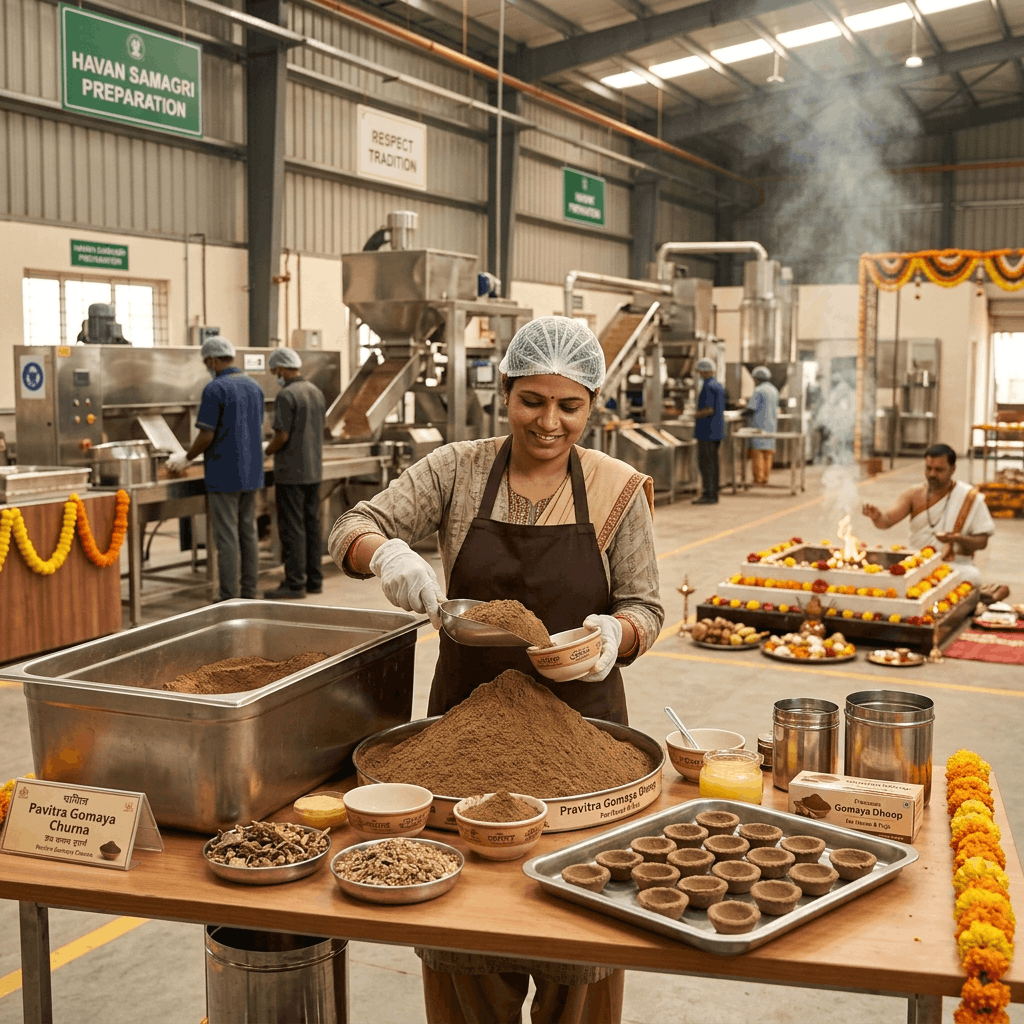
Scale of Raw Material Processing
The commercial production of cow dung-based aromatics requires precise material scaling to achieve profitability and consistent burn times. Industrial facilities typically process between 500 kg to 2,000 kg of raw cow dung powder per day. This fine powder acts as the primary combustible binder for Havan Cups and Dhoop sticks.
For a standard batch size of 100 kg of Havan Cup mixture, the ideal composition includes 60-70% finely sieved cow dung powder, 15-20% wood polish powder (Jigat or similar natural binders), and 10-20% aromatic herbs (Guggal, Loban, Sandalwood, Camphor, and essential oils). This ratio ensures structural integrity while allowing for a slow, even burn without crumbling. Large-scale manufacturing requires moisture control—the input cow dung must have a moisture content of less than 10% before milling to prevent fungal growth and ensure smooth machine extrusion.
Manufacturing Process: Step-by-Step Guide
Producing Havan Cups and Dhoop on an industrial scale involves mechanization and stringent quality control. Here is the standard operating procedure for commercial production:
Drying and Milling
Raw cow dung is sun-dried or processed through industrial solar dryers until the moisture level drops below 10%. It is then passed through a pulverizer or hammer mill to achieve a uniform, fine mesh size (usually 80-100 mesh) suitable for smooth molding.
Mixing and Binder Integration
The fine cow dung powder is transferred to heavy-duty ribbon blenders or dough mixers. Here, it is combined with natural adhesive powders like Jigat, along with premixed aromatic herbs and resins. Water is slowly added (typically 25-30 liters per 100 kg) to create a homogenous, pliable dough.
Hydraulic Molding and Extrusion
The dough is fed into semi-automatic or fully automatic hydraulic pressing machines. For Havan Cups, custom molds press the dough into the iconic cup shape with a hollow center. For Dhoop, extruder machines press the dough into continuous cylindrical sticks, which are then cut to size.
Curing and Drying
The wet cups and sticks are placed on perforated drying trays. In industrial setups, they are moved into temperature-controlled drying chambers (40-50°C) equipped with dehumidifiers for 24-48 hours. Proper curing prevents cracking and warping.
Filling and Packaging
Once completely dry, the hollow centers of the Havan Cups are manually or automatically filled with a mixture of Guggal, Loban, and Desi Ghee. The final products are then shrink-wrapped and packed in moisture-resistant retail boxes, ready for distribution.
Quality Control and Product Outcomes
The ultimate test of a high-quality cow dung Havan Cup or Dhoop lies in its combustion characteristics. A premium industrial-grade cup will ignite easily, burn continuously without extinguishing mid-way, and emit a pleasant, non-acrid smoke. The burn time for a standard 15-gram cup should be approximately 20 to 30 minutes.
Manufacturers must continually test batch samples for structural strength (resistance to breakage during transit) and ash residue. High-quality cow dung powder produces a pure, white ash, whereas impure or highly adulterated mixtures leave behind dark, gritty residues. Consistent quality ensures brand loyalty in the competitive spiritual and wellness markets.
Environmental and Ecological Benefits
The industrial use of cow dung for aromatics is a prime example of the circular economy. It provides a sustainable alternative to charcoal-based incense, which often relies on deforestation. Furthermore, the smoke emitted from pure cow dung, especially when combined with ghee and specific herbs, is traditionally believed to possess air-purifying and insect-repellent properties.
By creating a commercial demand for cow dung, this industry also supports rural economies and gaushalas (cow shelters), making the upkeep of non-lactating cattle economically viable. This prevents the abandonment of cattle and promotes ethical animal husbandry practices.
Safety Protocols and Industrial Protection
Operating a cow dung processing plant requires specific safety measures. Fine organic dust generated during the milling process is a respiratory hazard and, in high concentrations, poses a combustible dust explosion risk. Facilities must install robust industrial dust extraction systems and ensure adequate ventilation.
Workers handling the dry powders and operating the milling machinery must be provided with N95 masks, safety goggles, and ear protection. Additionally, strict fire safety protocols must be enforced, including the strategic placement of fire extinguishers and the isolation of drying chambers from raw material storage areas.
Market Scope, Economics, and Export Potential
The global market for spiritual wellness products, incense, and natural room fresheners is experiencing exponential growth. Cow dung-based Havan Cups, marketed as "eco-friendly," "chemical-free," and "organic," command a premium price both domestically and internationally. The profit margins in this sector typically range from 40% to 60%, making it a highly lucrative venture for MSMEs (Micro, Small and Medium Enterprises).
There is a robust export demand from regions with a significant Indian diaspora, such as the United States, United Kingdom, Canada, and the Middle East. Furthermore, the global shift towards natural living has opened new markets for these products among yoga studios, meditation centers, and holistic wellness retreats worldwide. Proper international certifications and attractive, eco-friendly packaging can significantly boost export viability.
📦 Bulk Orders & Export
Mitti Gold Organic: For bulk orders of all organic fertilizers — Farmers, Nurseries, and Export. WhatsApp: +91 95372 30173
Frequently Asked Questions
The raw cow dung must be dried to a moisture content of less than 10% before milling to prevent fungal growth, ensure a fine powder, and avoid clogging the pulverizer.
While any cow dung can technically be used, dung from indigenous (Desi) cows is highly preferred in the market due to its cultural significance, superior aroma when burned, and perceived spiritual benefits.
Jigat powder (derived from the bark of the Machilus macrantha tree) acts as a natural botanical binder. It provides the necessary adhesive qualities to hold the cow dung and herbs together, allowing the dough to be extruded or molded without crumbling.
Cracking is usually caused by drying the products too quickly or in direct, intense sunlight. It is best to dry the cups slowly in shaded, well-ventilated areas or in temperature-controlled drying chambers (40-50°C).
Yes, manufacturing cow dung Havan Cups and Dhoop can be highly profitable. The raw materials are inexpensive and easily sourced, while the finished products, especially when branded as organic and eco-friendly, yield excellent profit margins.