📅 Published: March 2024 | ✍️ Mitti Gold Organic | 🗂️ Soil Health
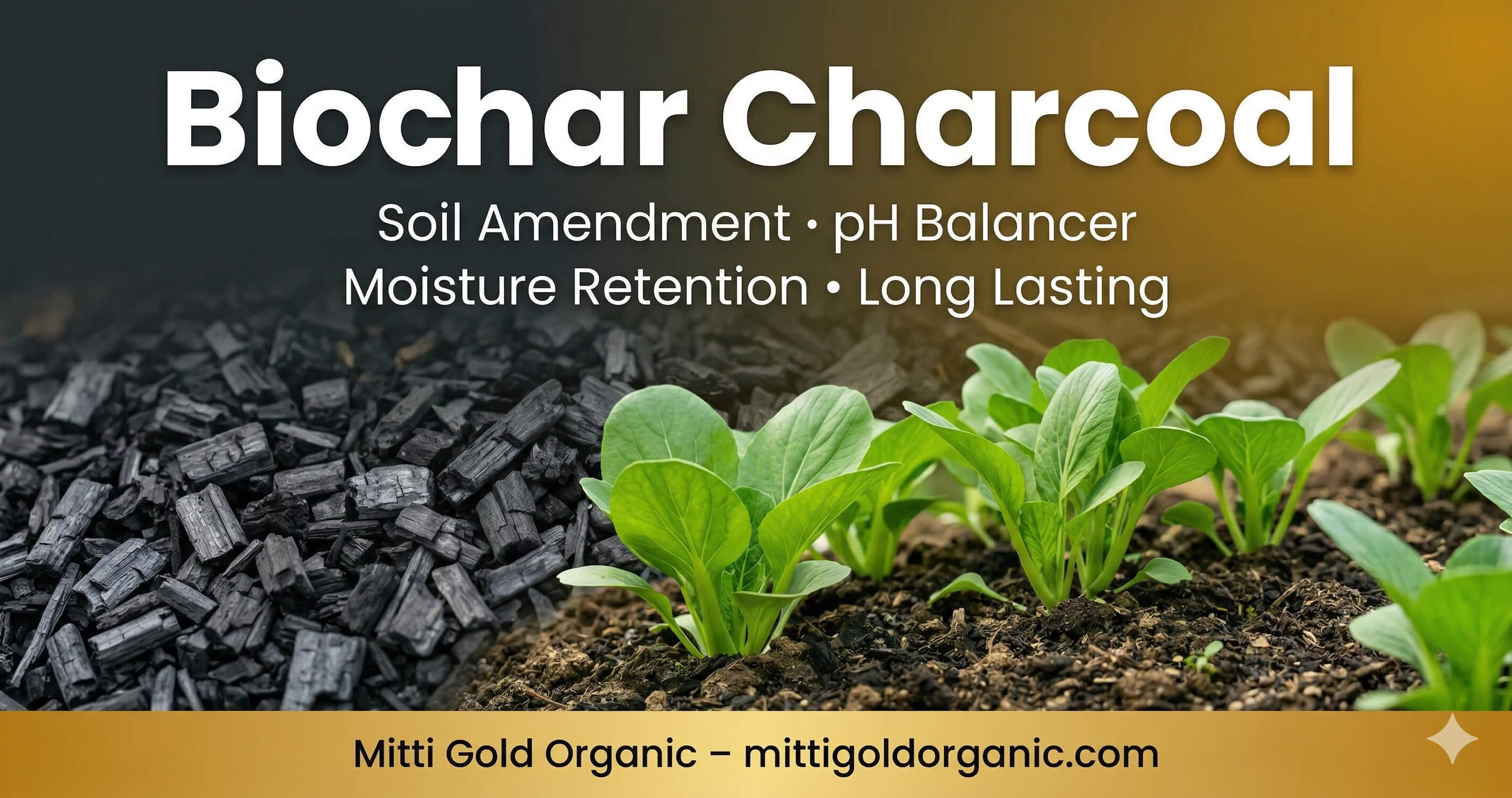
What is Agricultural Charcoal (Biochar)?
Biochar is produced by heating organic biomass — wood, rice husks, coconut shells, sugarcane bagasse — at high temperatures (300–700°C) in a controlled, low-oxygen environment through a process called pyrolysis. The result is a highly porous, carbon-rich solid that is chemically stable and biologically active when added to soil.
The use of biochar-like materials in agriculture dates back over 2,000 years to the Amazon basin, where indigenous farmers created "Terra Preta" (dark earth) — soils so rich and enduring that they remain productive today without any modern fertilizer inputs. Modern agricultural science has validated and expanded on this practice.
How Biochar Improves Soil
Unlike fertilizers that are consumed by plants within one season, biochar is a permanent soil amendment. Its benefits work through the following mechanisms:
- Pore structure: Biochar's microscopic pores hold both water and nutrients, acting as a reservoir in root zones
- CEC (Cation Exchange Capacity): Biochar increases the soil's ability to hold positively charged nutrients (Calcium, Magnesium, Potassium, Ammonium), reducing leaching by up to 50%
- Microbial habitat: The pores provide ideal shelter for beneficial bacteria and fungi, multiplying microbial activity in surrounding soil
- pH adjustment: Biochar is alkaline (pH 7–9), effectively reducing soil acidity and improving nutrient availability in acidic Indian soils
- Carbon sequestration: Biochar locks atmospheric carbon into stable form in the soil for hundreds of years
Proven Benefits of Biochar in Indian Farming
- 📈 Average 10–40% yield increase across crops in field trials
- 💧 35% improvement in water retention — critical for rain-fed and dryland farming
- 🧪 Significant reduction in chemical fertilizer requirements after 2–3 seasons
- 🌿 Natural disease suppression through improved soil microbiology
- ♻️ Carbon credits — useful for organic-certified export farms
- 🔋 Long-lasting — one application benefits soil for 10–50+ years
Biochar vs. Ordinary Charcoal — Key Differences
- Agricultural biochar is processed specifically for soil compatibility
- Regular cooking/BBQ charcoal contains binders, additives, and chemicals — never use in farming
- Biochar surface area: 300–500 m²/g; regular charcoal: much lower
- Mitti Gold Organic charcoal is tested for heavy metals and plant safety before supply
🔥 Order Mitti Gold Agricultural Charcoal: WhatsApp +91 95372 30173. Retail and bulk supply. Pan-India delivery and export.